The property market is in a constant state of evolution, but the pace of change has never been faster. For agents, hosts, and marketers across Australia, New Zealand, and the UK, staying ahead of the curve is no longer an advantage—it's a necessity. The driving force behind this transformation is technology, and understanding the future of property marketing AI, augmented reality, and other emerging tools is key to thriving in the years to come. These advancements aren't just abstract concepts; they are practical tools that are reshaping how we showcase, tour, and sell properties.
The Present Reality: How AI is Already Making an Impact
Before we look to the horizon, it's crucial to recognise that artificial intelligence is already deeply embedded in modern property marketing. It’s not a far-off dream; it's a powerful tool savvy professionals are using right now to gain a competitive edge. From AI-powered CRMs that predict which leads are most likely to convert, to algorithms that optimise ad spend on social media, AI is the silent partner working to make marketing more efficient and effective.
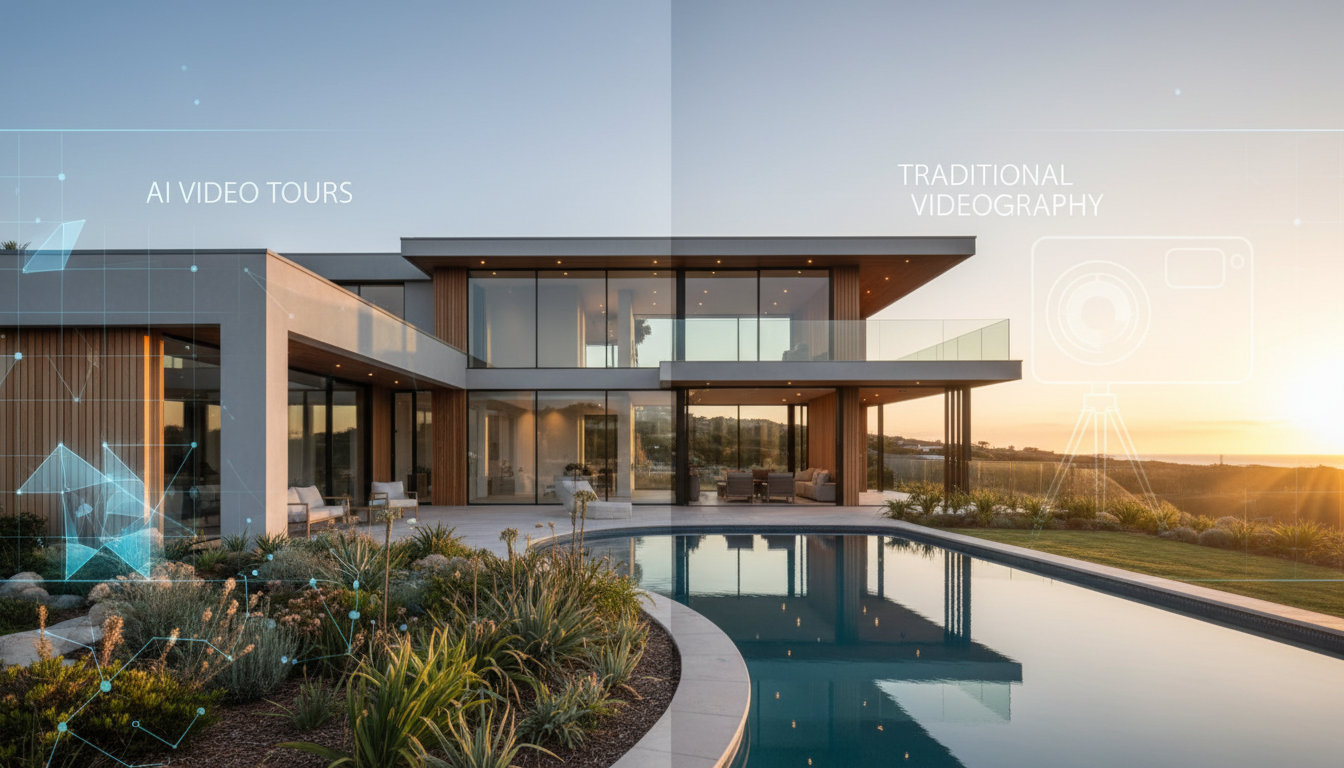
One of the most significant and accessible applications is in video creation. For years, creating a high-quality video tour was a costly and time-consuming process involving videographers, scheduling, and lengthy editing. Today, AI has completely changed the game. At Vinto, we see this every day. Agents can simply upload a set of standard property photos, and our AI analyses them—recognising rooms, features, and flow—to produce a cinematic, engaging video walkthrough in under an hour. This isn't just about saving time; it's about leveraging a format that buyers crave. In fact, compelling data shows video increases real estate enquiries, with some reports indicating listings with video receive over 400% more interest than those without.
By automating the creation of this high-impact content, AI frees up agents to do what they do best: build relationships, negotiate deals, and provide unparalleled client service.
The Near Future of Property Marketing AI: Hyper-Personalisation and Predictive Power
If today's AI is about automation and efficiency, tomorrow's is about intelligence and personalisation at a scale never seen before. The next wave in the future of property marketing AI will move beyond creating assets to actively shaping the buyer's journey.
Hyper-Personalised Content
Imagine a potential buyer browsing a listing online. Instead of a generic video tour, the AI system analyses their known preferences—perhaps they've previously looked at properties with home offices or large backyards. The system then dynamically assembles a version of the video tour that leads with those specific features, with an AI-generated voiceover highlighting the elements most relevant to that individual buyer. This level of personalisation transforms a passive viewing experience into a compelling, one-on-one presentation that speaks directly to a buyer's needs and desires.
Predictive Lead Generation
AI will also become much more sophisticated in identifying potential buyers before they even make an enquiry. By analysing broad market data, social media trends, and user behaviour on property portals, predictive analytics platforms will be able to identify cohorts of people who are exhibiting the early signs of entering the property market. This allows agents to target their marketing spend with incredible precision, reaching the right people with the right message at the exact moment they are starting their search. This is the future of property marketing AI: proactive, data-driven, and incredibly efficient.
Beyond 2D: The Immersive Worlds of AR and VR
While AI optimises what we see on our screens, Augmented Reality (AR) and Virtual Reality (VR) will change how we interact with physical and digital spaces altogether. These immersive technologies are poised to solve some of the biggest challenges in property marketing, particularly for remote buyers.
- Augmented Reality (AR): AR overlays digital information onto the real world through your smartphone or tablet. For property, its killer application is virtual staging. An agent can show a prospective buyer an empty room, and with an AR app, the buyer can place virtual furniture in the space, change wall colours, or even see how their own furniture would fit. This helps buyers emotionally connect with a property and visualise themselves living there, overcoming the "imagination gap" of an empty space.
- Virtual Reality (VR): VR takes this a step further, creating a fully immersive, 3D digital replica of a property. A buyer in London can put on a VR headset and "walk" through a home in Sydney, exploring every room at their own pace. This is far more interactive than a video, offering a true sense of scale, layout, and atmosphere. As VR technology becomes more accessible, it will become an essential tool that can help you sell properties sight unseen, opening up a global market of potential buyers.
For now, AI video tours serve as the perfect, accessible bridge to this immersive future, providing a dynamic sense of space that static photos simply can't match.
What This Means for Property Professionals
The rise of these technologies isn't a threat to the role of the real estate agent; it's an opportunity to elevate it. The agent of the future will be a strategic advisor, empowered by technology to deliver a superior client experience.
Here’s how you can prepare:
- Embrace Efficiency: Start by adopting tools that automate repetitive, time-consuming tasks. If you're spending hours trying to edit a video or coordinate with a videographer, you're losing valuable time that could be spent with clients. Using an AI video generator is a simple, high-impact first step.
- Focus on the Human Element: Technology can analyse data, create visuals, and personalise outreach, but it can't replicate empathy, expert negotiation, or local market knowledge. The more you let technology handle the logistics, the more you can focus on the high-touch, human-centric aspects of the job that build trust and win clients. The future of property marketing AI is about augmenting your skills, not replacing them.
- Start Learning Now: You don't need to become a tech expert overnight. Begin by exploring the tools that are readily available. Understanding the fundamentals of how AI can enhance your marketing is a great starting point. If you're new to the concept of AI-generated media, our complete guide to AI video tours is a fantastic resource to get you up to speed.
The landscape of property marketing is shifting from a broad, one-size-fits-all approach to one that is data-driven, personalised, and immersive. By understanding and adopting these powerful new tools, you can not only keep pace but also set a new standard for excellence in your market. The future of property marketing AI is bright, and it's putting more power into the hands of forward-thinking professionals than ever before.